

Blog / Driving Tips

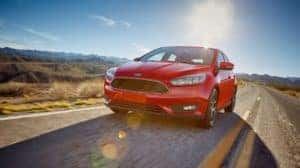
How to Best Maintain a Ford Focus

Ford Focus

As the owner of a Ford Focus, you know you're driving a solid vehicle backed by the quality of the Ford brand. To keep your car driving at peak performance levels, it's important to follow a regular service schedule. Consistent maintenance benefits you by preserving the key driving components of your vehicle, extending the vehicle's lifetime, and saving you money from costly emergency repairs.

To understand the best maintenance schedule for your Ford Focus, consult your owner's manual and check with your dealership. For more guidance about your specific model, you can also check the Ford Focus service support website. Here's a quick guide on how to maintain a Focus from the experts here at Brewster Ford in Brewster, New York.

5,000-Mile Service

The first maintenance check on Ford's service schedule at 5,000 miles is considered a minor service update. Technicians change your oil and filter, rotate your tires, and do a safety inspection for any leaks or malfunctions in the vehicle. This initial service establishes your baseline car performance and prepares your vehicle for peak operation with an initial assessment and oil change. Any time you get your vehicle serviced, it's also a good idea to ask the technicians at your dealership to check for any recalls that affect your model.

7,500-Mile Service

The 7,500-mile service typically includes another oil and filter change with a tire rotation. During the oil change, technicians perform a safety inspection for brakes, belts, hoses, and any fluid leaks. The technician will also listen to the vehicle for any strange noises and look for proper vehicle functions, including head and tail lights. For some vehicle owners and dealerships, the 7,500-mile tuneup may serve as the recommended initial service.

10,000-Mile Service

For the milestone of the first 10,000 miles, technicians will again change the oil and filter in your vehicle. They'll also perform a thorough tire rotation and inspection and an assessment of essential brake elements, including brake pads, shoes, drums, and rotors. Technicians will inspect the brake lines and hoses and check out the parking brake. Professionals check the cooling system and hoses, heat shields, and exhaust system in your vehicle, too.

Additional inspections on your Ford Focus involve nonsealed steering areas, including suspension, ball, and u-joints, and a check on the fluid level of your automatic transmission. A multipoint inspection to cover other areas, like wiper fluid, cabin filters, and battery life, concludes the 10,000-mile service. From here forward, the best way to maintain your vehicle is to continue service inspections every 10,000 miles.

20,000-Mile Service

The 20,000-mile service includes many of the same inspections as the 10,000-mile tuneup. This includes common replacements and updates, such as the cabin air filter, engine oil and filter, and a tire inspection and rotation. Technicians will also assess the brakes and brake elements, the cooling and exhaust systems, transmission fluid level, and the steering column. Another multi-point inspection completes this service.

30,000-Mile Service

The 30,000-mile service includes most of the same inspections and assessments as the 20,000-mile service. The main difference is the 30,000-mile service includes replacing the engine's air filter. Technicians once again will check systems and inspect key vehicle components for optimal performance levels. They'll complete another multipoint inspection and make any necessary recommendations for further service needs.

40,000-Mile Service

The 40,000-mile service includes the same inspections as the previous mileage checks. This time, the cabin air filter typically is replaced to coincide with the changing of the oil and oil filter, the key systems inspections, and the multipoint inspection. After the 40,000-mile service, most recommendations move the next tuneup to 60,000 miles because it often coincides with a vehicle's warranty from the manufacturer.

60,000-Mile Service

Servicing your vehicle at the 60,000-mile mark is an important step in maintaining optimal performance. As you near the end of many standard manufacturer warranties, this essential tuneup provides key diagnostics for vehicle systems and components. Your Ford Focus will undergo the typical oil and filter change, engine air filter replacement, and tire inspection and rotation. However, this service is an opportunity for technicians to check parts of your vehicle that may undergo some common wear and tear from daily use.

The 60,000-mile service is an important time to check the timing and drive belts, which may require replacing at this point in your car's life. Another common repair you may need at this time is to replace spark plugs or brake pads in the vehicle.

70,000- to 80,000-Mile Service

A tuneup at some point between these mile marks offers another chance for trained technicians to check key systems for wear and tear and maintain important vehicle components. You'll also change the oil and filters and undergo a tire rotation during this service.

100,000-Mile Service and Beyond

Although it's important to continue changing the oil and filters in your Ford Focus, your next major maintenance usually happens around the 100,000-mile mark. This is another important time to check for wear and tear to major vehicle systems and replace any parts that require attention. Your technician will provide a full diagnostic as with other scheduled tuneups, offering suggestions to help you keep your Focus in prime condition and extend the life of the car.

For additional service, consult your dealership and owner's manual to continue maintaining your vehicle. Purchasing an extended warranty for your vehicle can also affect the duration of scheduled or recommended maintenance on your Ford Focus.

Ford also recommends running a vehicle health report (VHR) regularly to track the maintenance of your model. A VHR gives you a snapshot of your vehicle using real operating conditions to calculate diagnostics. When you complete regular VHRs, you can set up the report to send you regular updates or reminders about maintenance and recalls, helping you stay current on important vehicle checks, replacements, and repairs.

At Brewster Ford, we want to make maintenance simple for you. That's why we offer shuttle service to and from your home and a comfortably furnished sitting area for your convenience while waiting in our service center. Trust our friendly and knowledgeable staff to provide quality maintenance and repairs on your vehicle with original parts from the manufacturer in a Ford-approved facility. Ready to schedule your next maintenance check? Contact us today to set up an appointment, or make a service appointment quickly through our online scheduling portal.

Posted in:

Related Posts

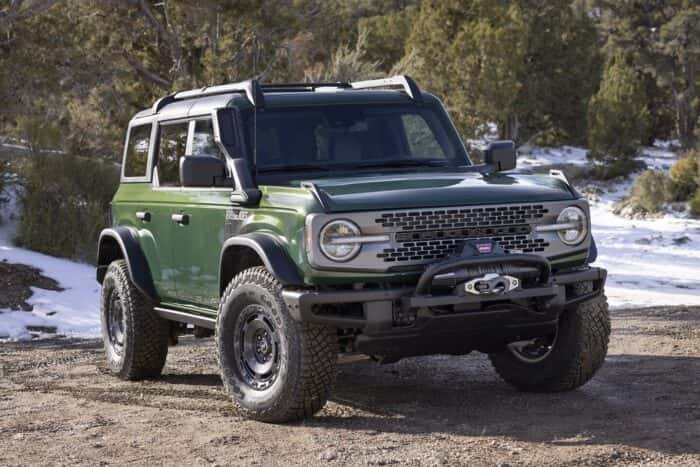
Green Ford Bronco parked on the rocks

Are Ford Broncos Reliable?

The Ford Bronco is back on the scene, winning over thrill seekers with its tough-as-nails design and off-road capability. If you've got questions about whether you can count on a Bronco for the long haul, our team at Brewster Ford cuts through the hype about this iconic ride's reliability record. more New Ford Bronco Inventory Used Ford Inventory Call Us! Ford Bronco Reliability: What You Should Know Since its reintroduction in 2021, the Bronco has been earning respect from drivers. Against the Jeep Wrangler and Toyota 4Runner, it's holding its own despite limited long-term data. The 4Runner has history on its side, but the Bronco's strong start shows real promise for long-term reliability. The numbers tell the story: Cars.com gives the 2021 model a 4.6/5.0 reliability score, with RepairPal rating it 4.1/5.0. According to Kelley Blue Book, an impressive 95% of owners would recommend their Bronco. Unlike the Wrangler's known transmission and electrical issues, the Bronco avoids these problems. J.D. Power and Consumer Reports highlight owner satisfaction with both off-road capability and daily driving performance. Detailed Ford Bronco Reliability Assessment Looking more closely at Bronco reliability reveals some interesting points. Early 2.7-liter turbocharged EcoBoost engines had valve train problems that affected performance and efficiency, according to the National Highway Traffic Safety Administration. Ford acted quickly, and 2023-2024 models are largely free of these issues. Both manual and automatic transmissions perform reliably, while electronics remain mostly glitch-free — rare in today's tech-heavy vehicles. The suspension and steering systems handle off-road abuse surprisingly well. Even with removable tops and doors, the body and interior hold up nicely, with only minor complaints about fit and finish. Some owners report ignition failures, exhaust gas recirculation system tube issues, electronic glitches, and occasional brake irregularities. You might hear rumors about transmission problems online, but many drivers log thousands of trouble-free miles. Ford Bronco Maintenance and Longevity Keep your Bronco healthy by following Ford's maintenance schedule. Change the oil every 10,000 miles, or every 5,000-7,500 miles if you're doing heavy off-roading and towing. At 20,000 miles, replace the cabin filter, inspect brake components, check linkage parts, and examine the rear axle lubricant. Regular maintenance equals longer vehicle life. Plan for $2,000-$4,000 in maintenance costs over five years — reasonable for an off-road vehicle. Outdoor enthusiasts should pay extra attention to suspension components, axles, shocks, and cooling systems after trail runs. Small maintenance investments now prevent expensive repairs later. How Many Miles Will a Ford Bronco Last? All signs point to your Bronco sticking around for the long haul. The Toyota 4Runner has set the bar high with regular reports of 200,000 miles with only basic maintenance. This version of the Bronco is still relatively new, so it can't claim to match the 4Runner's longevity just yet, but the early reports look quite encouraging. If you're looking for real-world proof, a Redditor documented their Bronco blasting past the 100,000-mile mark without any engine or major mechanical meltdowns, which is impressive for a vehicle that's only been out for a few years. Your results will vary depending on how you treat your ride. If you're a daily commuter, you'll likely get more miles out of your Bronco than someone who spends every weekend crawling over boulders. Both the 2.3-liter and 2.7-liter engines are holding their own so far. Quality Control and Manufacturing Insights Ford manufactures the Bronco at its Michigan Assembly Plant in Wayne, Michigan, the same facility that builds the Ford Ranger. That's no coincidence, as the two vehicles share chassis and underpinnings. This setup lets Ford keep a tight grip on quality across both production lines. Since bringing the Bronco back, Ford has constantly tweaked and improved the manufacturing process. The automaker fixed the valve train issues that plagued some 2021 and 2022 models by refining its approach. The Bronco's fit and finish stands up well against the competition — you'll notice solid body panel alignment and interior pieces that stand up to daily use. While no mass-produced vehicle is perfect, the Bronco's overall build quality suggests these vehicles are more than just weekend toys. Safety Evaluations The Insurance Institute for Highway Safety (IIHS) tested the 2024 Ford Bronco four-door SUV and came away impressed. It achieved Good scores in small overlap front tests and Moderate scores in overlap front tests and side crash tests. Results tell us that the Bronco is built to keep you safe. Tips for Maintaining and Improving Reliability To maximize your Bronco's longevity, follow the recommendations in your owner's manual. Regular oil changes, tire rotations, and inspections are essential. Off-roaders should inspect suspension parts, axles, shocks, control arms, springs, track bars, bushings, and mounting points regularly. Quick checks prevent costly repairs. Cleaning is crucial. Use Motorcraft Professional Strength Carpet and Upholstery Cleaner inside, and wash the exterior with lukewarm water and pH-neutral soap. Remove bird droppings, fuel spills, and tar immediately to protect your paint. Maintain your wheels with Motorcraft Wheel and Tire Cleaner, and remember to address small issues promptly before they grow into expensive problems. Is the Ford Bronco a Reliable Choice? The Ford Bronco is proving itself to be a solid bet. It pairs solid construction with a driving experience that works for both trail warriors and school-run parents. While long-term information isn't yet available, current data looks promising, especially if you plan to take advantage of the Bronco's off-road capabilities. The Bronco balances toughness, comfort, and versatility for daily commuters and weekend adventurers. With regular maintenance, it'll likely reward you with years of enjoyment. Test-Drive the Ford Bronco at Brewster Ford Today If you need more information or want to kick the tires in person, drop by our Brewster dealership and see if this rugged ride matches your real-world needs. Our team has the latest specs and can help you figure out if the Bronco is the best choice for you. Image from ford.com

2024 Ford Explorer Comparisons

2024 Ford Explorer vs. 2024 Jeep Cherokee

Like most automobile segments, the SUV continues to evolve, leaving enthusiasts anticipating specific models. Two such vehicles, the 2024 Ford Explorer and the 2024 Jeep Cherokee, stand out for their expected comfort, style, and performance. So, how do they compare to one another? We asked our SUV experts to delve into what each vehicle offers, helping you understand which SUV best suits your lifestyle. You'll learn what differentiates these models in a competitive SUV segment. New Specials Search New Explorers Search Used Inventory Design and Aesthetics Ford makes the Explorer in eight trims, each with unique design characteristics. For instance, the ST-Line and ST have street style cues, while the Timberline model offers off-road design elements. The Platinum trim features the premium flourishes you expect from a top-tier trim. While the Jeep Cherokee lineup boasts nine models, including the off-road-ready Overland and the luxurious Summit Reserve trim, the 2024 Ford Explorer stands out for its thoughtful design and versatility. Available in two- and three-row configurations, the Explorer maximizes passenger comfort and cargo space more effectively than its Jeep counterpart. Unlike the Cherokee, where opting for a three-row model may not significantly impact cargo space or legroom due to its design choices, the 2024 Ford Explorer ensures that choosing additional seating doesn’t compromise on spaciousness. Its design smartly accommodates both passenger needs and cargo requirements, making it a more practical choice for families and adventure-seekers alike. The Ford Explorer’s profile is sleek, modern, and designed with functionality, ensuring that every model, including the base, offers ample space and comfort. Ford Explorers have a sleek, bold, and modern style. Sharp lines and elegant curves give the SUV an athletic stance. However, the Cherokee has a more linear facade, trading boldness for refinement. Engine Performance and Efficiency You have two engine options for the Ford Explorer. The 2.3-liter EcoBoost inline four-cylinder turbocharged engine produces 300 horsepower and 310 lb-ft of torque and can tow up to 5,300 pounds when properly equipped. On the popular Explorer ST trim, this turbo-four engine gets 21 mpg around town and 28 mpg on the highway. You can opt for the 3.0-liter EcoBoost V-6 twin-turbo engine with an impressive 400 horsepower and 415 lb-ft of torque if you want more power. This powertrain can tow 5,600 pounds and gets 18 mpg in the city and 26 mpg on the freeway. Jeep has three engines available. The first is a 3.6-liter Pentastar V-6 engine with 293 horsepower and 260 lb-ft of torque. It gets 19 mpg on surface roads and 26 mpg on the interstates. Cherokees equipped with this engine can tow up to 6,200 pounds. The second is a 2.0-liter inline four-cylinder plug-in hybrid engine that produces 375 horsepower and 470 lb-ft of torque. While the added torque doesn't equate to increased towing capacity (it can tow 6,000 pounds), it does provide thrilling driving dynamics. It gets 46 MPGe thanks to its electric motor and lithium-ion battery. Finally, a 5.7-liter HEMI V-8 engine, available in three-row models, provides 357 horsepower, 390 lb-ft of torque, and a towing capacity of up to 7,200 pounds. As expected, you exchange fuel economy for power. This powertrain gets 14 mpg on surface roads and 17 mpg on the highways. Technology and Infotainment An 8-inch touch screen comes standard in the Explorer with an optional 10.1-inch vertically oriented version on certain trims. Powered by Ford's Sync 3 Technology and aided by the FordPass Connect system, you have more functionality and connectivity. A wireless charging pad and USB ports throughout the cabin ensure you and your passengers stay fully charged and connected. Apple CarPlay and Android Auto enable smartphone synchronization and hands-free operation. Plus, you can add the Ford+Alexa app to your cellphone and bring your favorite home assistant on every trip. Ford+Alexa lets you access voice navigation, traffic information, and Amazon shopping and control your home devices from your vehicle using voice commands. Jeep uses a standard 8.4-inch touch screen with a 10.1-inch horizontally oriented variant available on specific models. Infotainment runs on the Uconnect system, which includes built-in navigation on certain trims. You also get Apple CarPlay and Android Auto capability in the Cherokee. Wireless charging and multiple USB ports offer connectivity and charging ability for all. Explorer and Cherokee SUVs have optional rear-seat entertainment systems, ideal for keeping your passengers entertained on long road trips. Safety and Driver-Assistance Features Ford Explorer SUVs have the Ford Co-Pilot360 suite of driver-assistance technologies. These systems use radar, cameras, and optical sensors to monitor your Explorer and alert you to possible dangers. In some cases, the systems provide emergency brake support and evasive steering to help you mitigate potential accidents. Jeep Cherokee SUVs have a similar selection of driver-assist systems, including adaptive cruise control, blind-spot monitoring, rear cross-path detection, and parking systems. Like the Explorer, these systems alert and engage emergency braking and steering to help you avoid accidents. Off-Road Capabilities Explorer models come in rear- or all-wheel-drive (AWD) configurations, depending on the trim you select. The Timberline model adds more off-road equipment, such as all-terrain tires, off-road front struts, underbody skid plates, off-road rear shocks, a Torsen rear limited-slip differential, and provisions for auxiliary lighting systems in the front grille. You also get a Terrain Management system that lets you dial in your throttle, steering, and suspension to match the conditions. The intelligent AWD system sends torque where and when needed for additional control. Cherokee models have a rear-wheel-drive or four-wheel-drive drivetrain, depending on the trim. Of course, Jeep has a well-earned reputation for four-wheel-drive capability, and specific Cherokee models come with Jeep's Trail Rated badge. You can customize your Cherokee drivetrain to match the road surfaces and weather conditions. Price and Value for Money Ford offers its base Explorer at $36,860 MSRP. The top-of-the-range Platinum trim peaks at $54,770 MSRP. Explorer models deliver exceptional value for the price. Jeep's entry-level two-row trim starts at $36,495. The MSRP tops out at $71,040 for the two-row Summit Reserve. However, getting a three-row Cherokee costs $2,000 more. The Cherokee is a great SUV, but we don't see enough separation in the features to justify the higher cost. Brand Reputation and Reliability Both brands have decades of experience manufacturing automobiles you can rely on. The Explorer and Cherokee represent iconic nameplates for their brands, and their legacy is well represented in their 2024 models. Explore the 2024 Ford Explorer in Brewster, New York The Explorer and Cherokee cater to different preferences. The Explorer offers more spacious, family-friendly features, making it a compelling choice if you want a versatile SUV for your growing family. Jeep has its four-wheel-drive reputation, and the Cherokee does justice to its legacy. The Cherokee won't disappoint if you focus more on off-road adventuring. Ultimately, your decision comes down to what you value in an SUV. Browse our virtual inventory to learn more about the Ford Explorer. Alternatively, you can visit our showroom, speak with one of our SUV experts, and take one for a test drive.

Ford Expedition

How Long Is a 2023 Ford Expedition?

Do you want to get behind the wheel of a three-row SUV that'll offer a combination of a lot of extra legroom for you and your passengers and plenty of cargo space? Then you'll appreciate what the 2023 Ford Expedition has to offer. It's one of the largest SUVs out on the road today, so it would be the ideal choice for anyone in the market for an SUV that'll provide you with more size and space than you could ever imagine. So, just how big is the 2023 Ford Expedition? Learn all about it below to find out. How Long Is a 2023 Ford Expedition? When you look at the 2023 Ford Expedition models available, you'll notice one thing almost immediately. Some of them are longer than others. That's because Ford has manufactured 2023 Ford Expeditions in two different lengths. A standard 2023 Ford Expedition is 210 inches long. But you'll also have the option to go with a 2023 Ford Expedition MAX that measures up to 222 inches long. It's a great option if you need even more space than usual in a 2023 Expedition. How Wide and High Is a 2023 Ford Expedition? While the 2023 Ford Expedition MAX will be significantly longer than the standard 2023 Ford Expedition, it's worth noting that all 2023 Expeditions will have the same width and height. The width of the 2023 Ford Expedition is right at 80 inches, while the height of the 2023 Expedition is about 76 inches. As a result, we can guarantee the 2023 Expedition will look like a huge SUV regardless of which length you decide to buy. How Much Does a 2023 Ford Expedition Weigh? Because the 2023 Ford Expedition is so long, wide, and high, it shouldn't come as much of a surprise to hear that it's one of the heavier SUVs you'll find out there. The exact weight of a 2023 Expedition will depend on which particular trim you choose. If you go with a standard 2023 Expedition, it'll weigh in at somewhere between 5,368 and 5,623 pounds. If you go with a 2023 Expedition MAX, it'll weigh somewhere between 5,534 and 5,794 pounds. How Large Is the Gas Tank in a 2023 Ford Expedition? The amount of fuel you'll be able to fit in a 2023 Ford Expedition will also depend on the model you're interested in. The standard 2023 Expedition model has a gas tank that can hold up to 23.2 gallons of fuel. Meanwhile, the 2023 Ford Expedition MAX has a gas tank that can hold up to 27.8 gallons of fuel. How Much Passenger Volume Does a 2023 Ford Expedition Provide? One thing you might find interesting about the 2023 Ford Expedition is that you won't see a major difference in passenger volume with either the standard or the MAX model. While the MAX option has a little more passenger space, the difference is minimal. You'll get a quite comfortable 171.9 cubic feet of passenger volume in the standard 2023 Expedition versus a nearly equal 172.0 cubic feet of passenger volume in the MAX. However, there will be a much larger difference in cargo space between the two Expedition models. How Much Cargo Space Does a 2023 Ford Expedition Offer? If you plan to use a 2023 Ford Expedition to haul a lot of sports equipment or work gear or go away on family vacations, you'll be happy to hear that both have plenty of cargo space available. But the 2023 Ford Expedition MAX is the version you'll want to go for if you need the most cargo space. Its added length provides it with more space to transport all your work and sports equipment or other cargo inside. Overall, the standard 2023 Ford Expedition has 104.6 cubic feet of cargo space behind the first row, while the 2023 Ford Expedition MAX has 121.5 cubic feet. The 2023 Expedition MAX also provides more cargo space behind the second row (73.3 vs. 57.5 cubic feet) and the third row (34.3 vs. 19.3 cubic feet). Both models will provide you with more cargo space than the competition might offer, but you'll possibly like getting the extra bump in cargo space that the 2023 Ford Expedition MAX can offer. What Kind of Engine Does a 2023 Ford Expedition Have? With the 2023 Ford Expedition being as big and heavy as it is, you might assume it has a supersized engine to help it get around. And you'd be correct. Every 2023 Ford Expedition comes with an impressive twin-turbocharged 3.5-liter V-6 engine that can produce up to 380 horsepower and 470 lb-ft of torque. Some higher trims'll use the same engine but boost the output to 400 horsepower and 480 lb-ft of torque. Outside of helping move the 2023 Ford Expedition itself around, the engine found in this SUV is also capable of towing an impressive amount of weight. This is actually one area in which the standard 2023 Expedition is able to outdo the 2023 Expedition MAX. It has a towing capacity of up to 9,300 pounds, while the MAX version can tow up to 9,000 pounds. Nevertheless, both numbers are better than the towing capacities you'll find for similarly sized SUVs. Visit Our Lot To See How Long a 2023 Ford Expedition Is for Yourself Do you want to ensure that a 2023 Ford Expedition will be long enough and large enough for you? The only surefire way to figure this out will be by taking a look at one in person. At Brewster Ford in Brewster, New York, we can allow you to take either of the 2023 Ford Expedition models out for a test drive. We can also answer any other questions you might have about their specs. Touch base with us today to discover more about this monstrosity of an SUV.