Recommended Posts
Inside the 2027 Ford Explorer: Top Family-Friendly Cabin Features
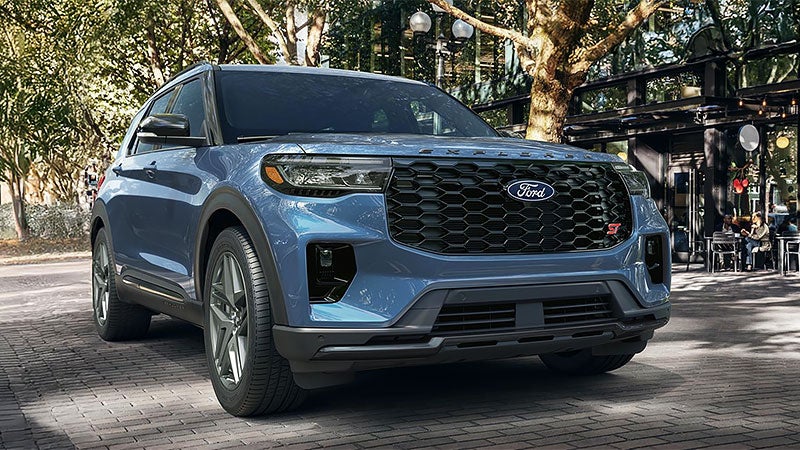
Family SUVs live or die by what happens inside the cabin, not the horsepower number on a spec sheet. The 2027 Explorer carries forward the cabin Ford overhauled for 2025, which is good news if you liked it and worth a close look if you haven't sat in one since. It's built around real family logistics: sports gear in the back, school pickup lines, long stretches on I-684 with everyone buckled in. If you're weighing it against your current ride, the 2027 Ford Explorer interior features are where it has to prove itself. Browse our current inventory of family SUVs while we walk through what's inside. What's New Inside the 2027 Ford Explorer The 2027 Explorer carries forward the cabin Ford overhauled for 2025, with pricing now published across all five trims: Active from $38,465, ST-Line from $44,200, Tremor from $49,200, Platinum from $50,660, and ST from $53,660. The Ford Security Package comes standard on Active, and a new Sinister appearance package joins the ST. Inside, the story is choice. Five trims span cloth, Miko Suede, ActiveX, and leather, with ten available packages layered on top. A Platinum build with massaging front seats and leather inserts sits in the same lineup as a work-ready Active, sharing the same three-row layout and the same 13.2-inch Ford Digital Experience screen. Seating Built for Putnam County Families Getting kids, gear, and grandparents in and out of an SUV without a hassle matters more than most spec sheets let on. The Explorer's seating strategy is built around that reality. E-Z Entry Captain's Chairs vs. 35/30/35 Bench Seating Most 2027 Explorer trims start with six-passenger seating, meaning second-row captain's chairs with E-Z Entry and armrests. The exception is ST-Line, which comes with the 35/30/35 bench as standard. Going the other way, the seven-passenger bench is available on every trim except Tremor, so a Tremor buyer is locked into six seats. That's the first fork in the road for a family shopping this lineup. Captain's chairs make third-row access dramatically easier, which matters if a kid is climbing back there twice a day. The bench adds a seventh seat, which matters if you run a carpool. Decide that before you fall for a trim, because on ST-Line and Tremor the choice is partly made for you. Second and Third Row Access and Legroom All 2027 Explorer models come with a third row, built as a 50-50 split bench that folds flat into the floor. For families who fold and unfold seats constantly between soccer practice and Costco runs, Ford's PowerFold third row is a genuine time-saver, dropping the seats with a single button press from the cargo area. It's standard on ST and Platinum and available on Tremor. Here's how the space breaks down: Head room: 40.7" first row / 40.5" second row / 38.9" third row Leg room: 43" first row / 37.5" second row / 31.8" third row Seating: six standard on most trims, seven with the available bench Third row: 50-50 split, folds flat, PowerFold on ST and Platinum Materials shift by trim as well. Active gets heated cloth, ST-Line adds unique cloth with red stitching, Tremor and ST step up to heated and ventilated Miko Suede, and Platinum runs ActiveX with leather inserts. Third-row leg room at 31.8 inches is honest for the class: fine for kids on the ride to a rink in Brewster, tight for adults on a run to Danbury. Comfort Features for Long I-684 Commutes Anyone who commutes from Putnam County toward Danbury, Connecticut, or south through Westchester County knows that comfort features stop being a luxury and start being a necessity after the first hour in traffic. Multicontour Front Seats with Active Motion® Massage Multicontour front seats with Active Motion massage come standard on Platinum and are optional on Tremor and ST. For parents doing the daily grind on I-684, this is the feature that earns its keep after the first hour, working the lower back while you sit still in traffic. Platinum also gets heated, ventilated seats with leather inserts as standard, and the available Platinum Ultimate Package adds the 3.0L V6, premium leather-trimmed seating, unique 21-inch wheels, and a chrome quad-tipped exhaust. The panoramic Vista Roof with power shade is optional on every trim. Tri-Zone Climate Control Tri-zone electronic automatic temperature control is standard on every 2027 Explorer, from the Active up. Driver, front passenger, and rear rows each get their own setting, which matters more than it sounds when you've got a toddler who runs hot and a teenager who runs cold in the same vehicle. Rear auxiliary climate control, which adds a dedicated control panel back there rather than routing everything through the front, is standard from ST-Line up and optional on Active. Ford Digital Experience and Cabin Technology Tech expectations have shifted fast, and family buyers increasingly judge an SUV by how well it keeps kids occupied and parents connected on the road. Schedule a test drive and get a firsthand look at the Explorer's digital layout. 13.2-Inch Touchscreen and Digital Instrument Cluster Standard on the Active trim and up, the 13.2-inch touchscreen runs on the Ford Digital Experience platform, giving you a large, clear interface for navigation, media, and vehicle settings. Ford Co-Pilot360 driver-assist technology is standard across the lineup, including adaptive cruise control on the Active. What varies is the camera and sensor package: the 360-degree camera with split view, front parking sensors, and reverse brake assist are standard from ST-Line up but aren't offered on the Active at all. If parking-lot confidence is high on your list, that's the reason to start at ST-Line. Connectivity and Charging for the Whole Family The 2027 Explorer is equipped with a 5G modem and wireless Apple CarPlay® and Android Auto™, so phones connect without hunting for a cable. Families who want more can add the available Ford Connectivity Package, which includes unlimited Wi-Fi for streaming, podcasts, karaoke, Google Maps, video, and games while parked, active for one year from the vehicle's warranty start date. The built-in hotspot supports up to 10 devices within a 50-foot range, which comfortably covers a packed road trip. Active and ST-Line get three 12-volt power points, one each in the first row, second row, and cargo area, while Tremor, ST, and Platinum run two, in the first row and cargo area. Sound system options range from a B&O 10-speaker setup, standard on ST-Line, up to a 980-watt 14-speaker system, both including a subwoofer and Sound Stage, a fabric-wrapped acoustic sound bar. Cargo and Storage Space for Weekend Trips to Brewster Weekend trips into Brewster, whether for hiking near the Hudson Valley or a quick run down Route 22, tend to come loaded with strollers and coolers and whatever gear bag didn't make it out of the trunk last time. The Explorer's cargo numbers vary by trim, so it's worth knowing which one applies to the configuration you're considering. Trim-Specific Maximum Cargo Volume Cargo volume shifts slightly by trim, and it's worth knowing which number applies to the configuration you're looking at: Behind the third row: 16.3 cu ft on every trim Behind the second row: 46 cu ft on every trim Maximum, both rows folded: 85.8 cu ft on Active and ST-Line, 85.3 cu ft on Tremor, ST, and Platinum That 16.3 figure is the one to pay attention to, since it's what you have with all seven seats occupied. It handles a week of groceries or a couple of duffel bags, but a full carpool plus everyone's hockey bags will mean folding a third-row seat. The 46 cubic feet behind the second row is the everyday configuration for most families, and that's where the Explorer is genuinely roomy. Everyday Storage Solutions The big cargo number matters less on a Tuesday than where the small stuff goes. The Explorer handles that well: Underfloor storage bin behind the third row, useful for the jumper cables and the emergency kit you don't want sliding around Reversible cargo cover with a non-carpeted side, so muddy cleats and wet gear go on the wipeable surface Cargo hooks standard on every trim for bags that would otherwise tip over on the first turn Center console with armrest and storage bin, standard across the lineup, leather-covered on Platinum Dome and map lights in all three rows, so nobody's hunting for a dropped water bottle in the dark Overhead console with sunglasses holder Available cargo area management system and a folding soft-sided organizer, both dealer-installed options The reversible cover is the one families notice after the fact. If your weekends involve a field in October, it's the difference between hosing something off and shampooing your cargo carpet. Standard Ford Co-Pilot360® Safety Technology Safety technology is where the Explorer lineup does a lot of heavy lifting, though it's important to understand which pieces come standard and which are trim-dependent. The core Ford Co-Pilot360® suite includes Pre-Collision Assist with Automatic Emergency Braking, BLIS® (Blind Spot Information System) with Cross-Traffic Alert, a Lane-Keeping System, a Rear View Camera, and Auto High-Beam Headlamps. These appear across multiple trims, including Active, though availability isn't uniform across the entire lineup. Families who want more can look at available premium add-ons, including Adaptive Cruise Control with Stop & Go and Lane Centering, Evasive Steering Assist, and Post-Collision Braking. There's also an available camera system offering front, rear, side, and top-down views with a split-view display active under 6 mph, handy for tight parking lots outside a school or rink. These features vary by trim, so it's worth checking exactly what comes with the configuration you're looking at rather than assuming everything is standard. Find the 2027 Ford Explorer for Sale in Brewster, NY If this cabin walk-through has you thinking about your next family SUV, our new Ford SUVs in Brewster lineup is a good place to start browsing. We're proud to have earned the Edmunds Five-Star Dealer Award, a recognition from Edmunds that reflects the kind of transparent, low-pressure buying experience we aim for every day. As a locally owned, family-run dealership on Route 22, we serve families across Putnam County, northern Westchester County, the Hudson Valley, and Danbury, Connecticut. Brewster sits at a genuinely convenient crossroads near I-684 and I-84, Routes 22 and 312, and US 6 and 202, which makes stopping by on your commute home an easy detour rather than a special trip. You can view the 2027 Ford Explorer for sale in Brewster, NY and compare trims side by side before deciding which configuration fits your family best. Schedule Your Family Test Drive at Brewster Ford Reading about captain's chairs and cargo volume only gets you so far. The best way to know if the 2027 Explorer's interior fits your family is to climb in, load it up with your usual gear, and drive it on the same roads you'll use every day. Why Families Choose Brewster Ford A pressure-free, transparent-pricing buying experience Locally owned and family-run, with deep roots in the Brewster, NY community Recognized with the Edmunds Five-Star Dealer Award for customer trust Get Started We'd encourage getting pre-qualified through our financing application before you visit, so you can focus on comparing features instead of paperwork once you're here. When you're ready, schedule a test drive with us or contact us with any questions about trims, seating configurations, or availability. We're happy to walk you through the details in person, no pressure, just straight answers from a dealership that's been part of this community for years.

5 Essential Maintenance Steps to Prevent Depreciation & Protect Trade-In Value
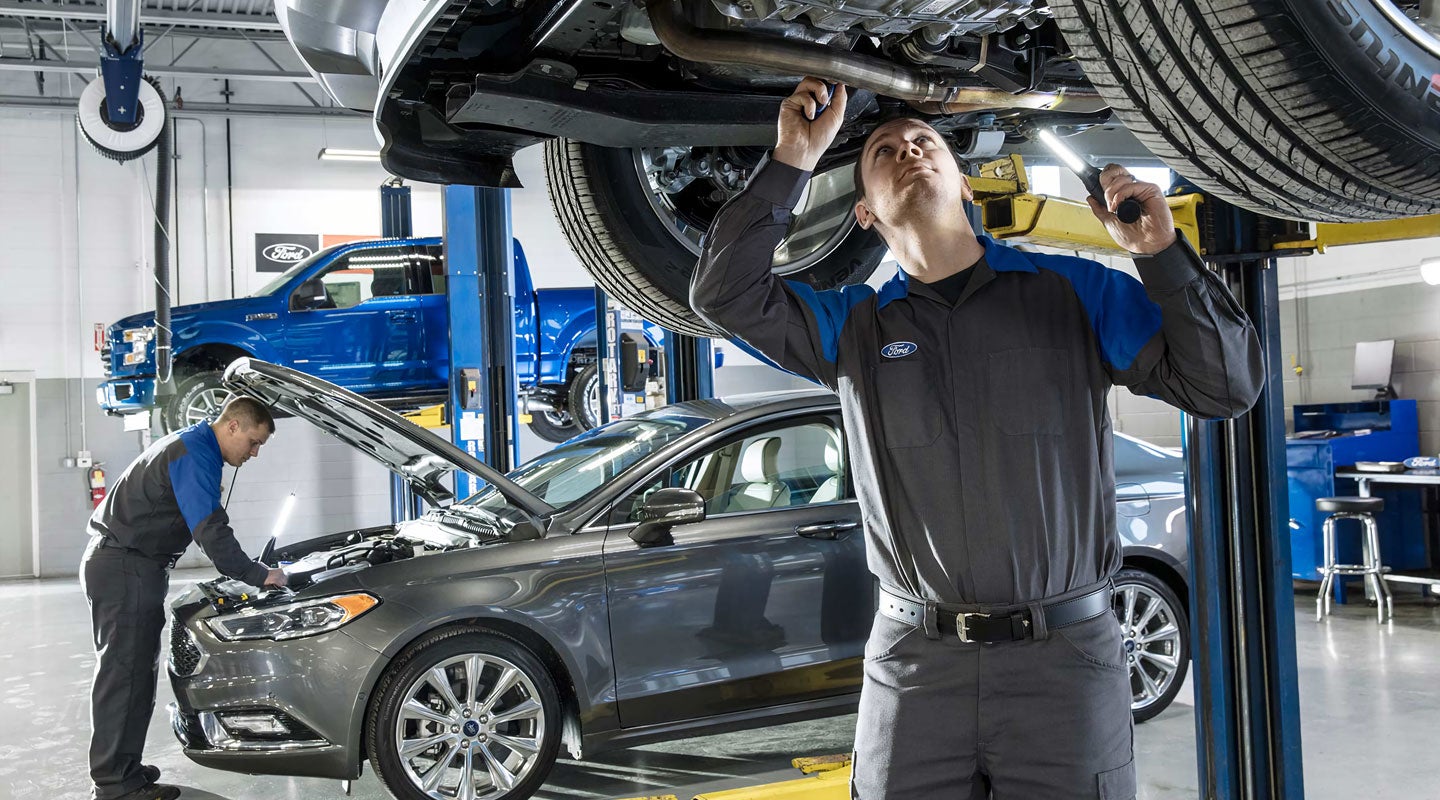
Every Ford owner in the Hudson Valley faces the same slow, quiet threat to their vehicle's worth: depreciation. Some of it you can't do much about. But a big chunk is preventable, especially when winter road salt, missed fluid services, and small cosmetic dings pile up unnoticed. We work with Ford owners across Putnam County every week, and the difference between a trade-in that impresses an appraiser and one that gets a lowball offer almost always comes down to maintenance habits. If your F-150 or Explorer is due for attention, you can schedule your service appointment with us today and start protecting what you've invested in your vehicle. Protecting Your Ford's Value in the Hudson Valley Climate Our region isn't gentle on vehicles. Winter salt on Route 22, humidity swings, and stop-and-go traffic near the Danbury, Connecticut border mean Fords here work harder than vehicles in milder climates. Owners who want to hold onto value at trade-in time need a slightly more disciplined approach than a generic checklist. Kelley Blue Book notes that investing in overdue service and repairs improves both a vehicle's performance and fuel economy, and its resale value. Small, consistent care adds up to real money back in your pocket later. Below are the five steps we recommend most often to customers looking to protect vehicle trade-in value in Brewster, NY, and the surrounding area. Step 1: Stick to Factory-Recommended Fluid Service Schedules For 2008-and-newer Ford vehicles, Ford generally recommends oil changes every 7,500 miles or six months, though your specific model and driving conditions may call for a different interval. Brake fluid typically needs service every three years and requires dealer-level equipment to do correctly. Transmission fluid service intervals vary significantly by model; some Ford owner's manuals specify replacement around every 150,000 miles, while the six-year/100,000-mile-then-three-year/50,000-mile schedule applies to engine coolant, not transmission fluid. Consult your owner's manual or a service advisor for the exact schedule for your vehicle. Your owner's manual, or one of our advisors working from your VIN, can confirm the exact schedule for your vehicle. Why Fluid Maintenance Directly Impacts Appraisal Offers Fluids aren't just about keeping the engine running smoothly today. Ford has noted that damage resulting from neglected maintenance may not be covered under warranty, and that same neglect shows up during a trade-in inspection. Appraisers look for signs of consistent care, and a spotty fluid history raises red flags about hidden wear elsewhere. Our Ford service department in Putnam County uses genuine Ford and Motorcraft parts and fluids, so every service gets documented and traced, exactly the kind of paper trail buyers and appraisers want to see. Step 2: Schedule High-Pressure Undercarriage Washes to Fight Road Salt Rust AAA recommends washing your undercarriage at least monthly year-round, and more frequently during winter, specifically to remove road salt before it has time to sit against metal surfaces and start reacting. How NY Winters Accelerate Corrosion Damage Road salt triggers electrochemical corrosion that eats away at the undercarriage, brake lines, exhaust system, and paint over years of exposure. The New York State Thruway Authority uses roughly 180,000 tons of rock salt statewide each winter, which gives you a sense of how much salt exposure vehicles across the state accumulate season after season. NHTSA data cited by Erie Insurance points to vehicles becoming especially vulnerable to salt corrosion after eight or more years of exposure, worth keeping in mind if your Ford has spent multiple Hudson Valley winters on the road. Once rust reaches structural components, it stops being cosmetic and becomes one of the fastest ways a vehicle's value drops without the owner even noticing. Step 3: Maintain Precise Tire Alignment Ford recommends rotating tires at every oil change, which makes it a natural moment to also have alignment checked, particularly if you notice your vehicle pulling to one side. Preventing Uneven Wear That Lowers Resale Inspections Michelin points out that misalignment often shows up as pulling to one side, an off-center steering wheel, or uneven tread wear across the tire face. Tire condition is typically one of the very first things a buyer or appraiser inspects, so unevenly worn tires can directly reduce resale value. This is a low-cost fix with an outsized payoff. Most owners associate alignment with ride comfort rather than trade-in dollars, which is exactly why it gets overlooked. Step 4: Keep Detailed, Verifiable Service Logs Industry estimates suggest that a well-documented service history can add 10 to 20 percent to a used vehicle's private-party sale price. Dealers also generally extend higher trade-in values to vehicles with complete service records. Hold onto every receipt and invoice you can, whether paper or digital; this is close to the top of the list when it comes to increasing what a car is worth before you even walk into a dealership. Building a Trade-In-Ready Paper Trail with Brewster Ford Every visit to our Ford service department in Putnam County gets logged and tied to your vehicle's history, and customers can also track digital maintenance reminders through the Ford app. That combination gives you a clean, verifiable record to hand over at trade-in time, without digging through a glove box full of paper receipts. If it's been a while since your last visit, you can book a service visit online and start building that record now, before another season passes. What Appraisers Look For When our team evaluates a trade-in, we're looking at many of the same things KBB's Instant Cash Offer tool considers: condition, options, dents or mechanical issues, and current local demand. A documented history simply makes that evaluation faster and more favorable. Broadly, appraisers focus on: Service records showing consistent, on-schedule maintenance Tire tread depth and even wear patterns Interior condition, including seats, carpet, and dashboard wear Vehicle history, including accidents, title status, and prior ownership KBB and Edmunds both use a condition scale of Fair, Good, Very Good, and Excellent, and relatively few vehicles ever qualify for that top "Excellent" tier. That's a useful benchmark, and reaching it comes down to consistent attention to the items above. Step 5: Repair Minor Cosmetic Wear Before It Devalues Your Vehicle Cosmetic issues are the most visible thing an appraiser sees, and they color the first impression of the entire vehicle. Fix small dents, scratches, and interior wear before your appraisal, not after. Paintless dent repair generally runs between $75 and $150 per panel, and professional detailing typically falls between $100 and $200. These figures aren't a guaranteed return on investment, but they're worth weighing against how a dented door panel or stained interior might affect an offer. Some inexpensive fixes make an outsized difference: a full detail, a scratch touch-up, and fresh wiper blades or floor mats before your appointment all signal a well-cared-for vehicle without a major expense. Topping off fluids beforehand helps too. It's also fair to acknowledge that some brands, Toyota among them, have a reputation for strong resale value. But maintenance matters more than badge loyalty. A well-maintained Ford, with clean service records and minimal cosmetic wear, holds its own at trade-in time regardless of brand comparisons. If you're weighing when to sell, consider timing your trade-in before a major mileage threshold, or before your vehicle faces another full winter of road-salt exposure. Trust Putnam County's Ford Service Experts to Preserve Your Investment We've served Brewster, NY, for more than 50 years, and that kind of longevity comes from doing right by the community. Our technicians are factory-trained and certified, and we use genuine Ford and Motorcraft parts on every job. Our pricing stays transparent at every stage of the job, and we're proud to have received an Edmunds Five-Star Dealer Award, a recognition tied directly to customer experience. As a locally owned, family-run dealership, we serve drivers throughout Putnam County, northern Westchester County, the wider Hudson Valley, and Danbury, Connecticut. Whether you need a routine fluid service, an undercarriage wash after a salty commute, or a full pre-trade-in inspection, our team treats your Ford's long-term value as seriously as you do. Schedule Service or Get Your Trade-In Value Today You have more control over depreciation than most people realize. Fluid services on schedule, regular undercarriage washes, proper alignment, complete service records, and small cosmetic repairs together make up a straightforward maintenance routine that pays off when it's time to sell or trade. Ready to Take the Next Step? If you're ready to get ahead of it, schedule your service appointment with our certified technicians, or if you're closer to your next vehicle, calculate your vehicle's trade-in value and see what your maintenance history is worth. You can also reach our service department directly at 845-205-7086, Monday through Friday from 7:30 a.m. to 5:00 p.m., and Saturday from 8:00 a.m. to 3:00 p.m., or visit us at 1024 Route 22, Brewster, NY 10509.
Understanding Ford Warranty Coverage vs. Extended Protection Plans
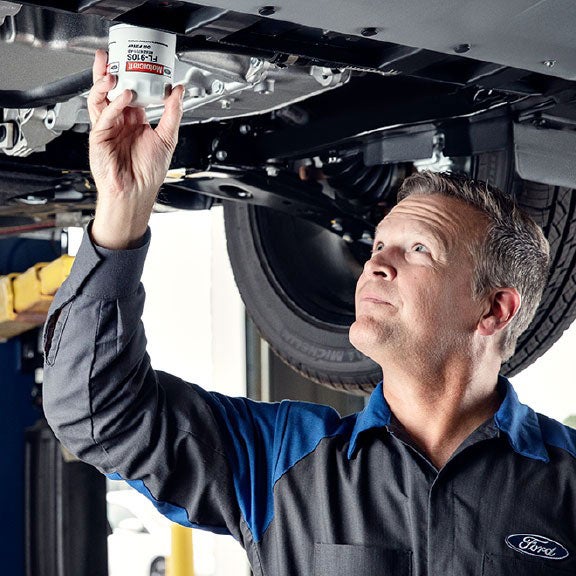
Every new Ford comes with built-in protection, but knowing exactly what that Ford Warranty covers, and when it runs out, makes a real difference to your wallet down the road. Whether you're driving a new F-150 through a Brewster winter or putting daily miles on an Escape, understanding your coverage helps you plan ahead instead of getting surprised by a repair bill. If you have questions about what your vehicle currently qualifies for, our team can walk you through it when you schedule a service appointment. Why Ford Warranty Coverage Matters for Hudson Valley Drivers Driving in the Hudson Valley means dealing with real seasonal extremes. Icy roads and salt-treated highways, plus long stretches of rough pavement, put extra stress on a vehicle. The Ford Warranty exists to protect you against manufacturing defects and mechanical issues that show up regardless of how carefully you maintain your car. For local drivers, that protection isn't abstract. It's the difference between a covered repair and an unplanned expense when winter conditions start taking a toll on your vehicle's undercarriage, brakes, or electrical systems. What's Included in the Ford Factory Warranty The factory warranty isn't one single policy. It's a set of overlapping coverages, each with its own time and mileage limits, all backed directly by Ford Motor Company. New Vehicle Bumper-to-Bumper Coverage The Bumper-to-Bumper Limited Warranty covers 3 years or 36,000 miles, whichever comes first. It protects nearly every component against defects in materials or workmanship, including high-tech systems like Sync 4, navigation, and driver-assist sensors, plus electrical parts such as alternators, power seats, and wiring harnesses. Climate control components like the AC compressor and heating system are included, along with steering and suspension parts like linkages and bushings. Wear items aren't covered under this warranty, including tires, brake pads, wiper blades, and clutch discs, since these wear down through normal use rather than defects. Powertrain Protection Explained Ford's Powertrain Warranty runs for 5 years or 60,000 miles and covers the engine, transmission, axle and driveshaft components, and differentials. Parts and labor are both included when a covered component fails due to a manufacturing defect. Engines and transmissions are among the most expensive systems to repair, so this piece of coverage carries a lot of the weight. Roadside Assistance and Corrosion Coverage Roadside Assistance runs up to 5 years or 60,000 miles and includes 24/7 emergency towing, flat tire changes, lock-out assistance, fuel delivery, and battery jump-starts. The Corrosion Perforation Warranty covers rust that perforates sheet metal for 5 years with no mileage limit. There's also a Safety Restraint Warranty covering airbags (SRS) and seat belts for 5 years or 60,000 miles. When Does Factory Coverage Run Out? A lot of owners get caught off guard here. Every one of these warranties starts on your vehicle's in-service or delivery date, and each one ends whenever you hit either the time limit or the mileage limit, whichever happens first. A driver who racks up highway miles quickly might hit the 36,000-mile Bumper-to-Bumper limit well before the three-year mark, while a driver who puts on fewer miles might see the warranty expire based on time instead. Check both numbers, not just the calendar. What Happens After Your Warranty Expires Once your factory coverage lapses, you're financially responsible for repairs unless you have some form of extended protection in place. Common Repair Costs Without Protection Repair costs without coverage vary widely depending on what fails. Transmission replacement typically runs $3,000 to $7,000, though costs can exceed $8,000 for trucks, European models, or CVTs, with labor alone often taking 8 to 12 hours or more depending on the vehicle. Smaller transmission issues, like fluid, solenoid, or valve-body repairs, can vary widely in cost, while a full rebuild typically runs $3,000 to $7,000. Across all repair types, costs can add up substantially, from minor fixes costing a few hundred dollars to major replacements exceeding $7,000 or more depending on severity. Rust repair costs less dramatically at first, with minor jobs running a couple hundred dollars, but structural corrosion repair climbs considerably higher once it affects the frame or other load-bearing parts. How Hudson Valley Winters and Road Wear Accelerate Vehicle Stress Local conditions genuinely accelerate this kind of wear. New York State's Department of Transportation applies salt and liquid brine to Hudson Valley roads throughout winter, and that salt clings to a vehicle's undercarriage, attracting moisture and speeding up rust and corrosion. Much of this damage happens out of sight underneath the vehicle, where it can weaken structural components and brake lines and eat into suspension parts, while also chipping and discoloring paint. Salt wears away the protective clear coat over time, exposing bare metal to corrosion, and it can damage brake lines, suspension, and frame components alike. Our technicians sometimes catch structural corrosion early just by noticing a louder-than-normal exhaust note during an inspection. EV owners face their own version of this risk too, since battery packs, cooling lines, low-mounted electronics, high-voltage connectors, charging ports, and aluminum housings are all more exposed to accelerated corrosion in this climate. Introducing Ford Protect Extended Service Plans Once you understand how factory coverage winds down, and how local winters speed up wear, the value of extended protection becomes a lot clearer. How Ford Protect Differs from the Factory Warranty Ford Protect Extended Service Plans are Ford Motor Company's own manufacturer-backed plans, sold through authorized dealers and honored at every authorized Ford and Lincoln dealership across the United States, Canada, and Mexico. Repairs are handled by factory-trained technicians using genuine parts. Ford Protect ESPs cover component failure caused by defects in material or workmanship, similar in spirit to the factory warranty, though normal wear and tear generally isn't included except where a specific tier states otherwise. Owners are responsible for the applicable deductible on covered repairs. Ford has sold more than 40 million of these service plans, which says a lot about how many Ford owners across the country have leaned on the program over the years. Coverage Levels: Comparing the Tiers Ford Protect offers several tiers, each named to reflect its scope. PowertrainCARE focuses on critical engine and transmission components. BaseCARE steps up to 84 major parts, including the engine, transmission, drive axle, steering, and brakes, with terms available up to 10 years or 175,000 miles. ExtraCARE broadens that to 113 key components, adding high-tech systems, AC, and heating on top of steering and brakes, also up to 10 years or 175,000 miles. PremiumCARE covers more than 1,000 components across the engine, transmission, steering, brakes, front suspension, and electrical systems, running up to 10 years or 175,000 miles, and it's the only tier that uniquely includes normal wear and tear. For EV owners, Ford offers PremiumCARE EV and PremiumCARE Plus EV, both covering thousands of components including EV motors, electrical systems, high-tech features, steering, brakes, front suspension, and AC, with terms running up to 10 years or 150,000 miles. There's no standalone PowertrainCARE option for EVs, given how different their drivetrains are. Ford also offers a separate Premium Maintenance EV plan, which covers scheduled maintenance plus select wear items like wiper blades, brake pads and linings, and shock absorbers. Our team can help you compare tiers against your driving habits before you decide. Key Benefits of Extended Coverage Beyond the coverage itself, Ford Protect plans come with practical perks that matter once you're actually dealing with a repair. Nationwide Ford-Certified Repairs Because Ford Protect is honored at any authorized Ford or Lincoln dealer in the U.S., Canada, or Mexico, coverage travels with you. If something comes up while you're out of town, you're not limited to a single shop back home. Rental Car and Trip Interruption Perks If your vehicle needs to stay overnight for a covered repair, you may be eligible for up to 10 days of rental coverage. Travel expense reimbursement can also help cover lodging and meals as well as taxi or shuttle costs if a covered breakdown happens away from home. Predictable Costs and Peace of Mind Rather than facing an open-ended repair bill, you're generally looking at a known deductible per visit. Coverage is also transferable if you sell the vehicle, which can support resale value since the next owner inherits the remaining protection. Is a Ford Extended Service Plan Right for You? That depends on how long you plan to keep the vehicle, how many miles you put on it each year, and how much risk you're comfortable carrying once the factory warranty runs out. Drivers who keep vehicles well past the powertrain warranty's 60,000-mile mark, or who deal with a lot of winter driving and road salt exposure here in the Hudson Valley, tend to get the most value from extended coverage. It's also worth remembering that Ford Protect is backed directly by Ford Motor Company, not a third-party company, which means claims are handled the same way at any Ford dealer rather than depending on a separate company's financial standing. Terms and coverage details can change, so confirm current specifics with our team or Ford's official documentation before making a decision. If you're weighing a Ford extended service plan Brewster, NY drivers can rely on, our advisors at the Brewster Ford Service Center are happy to walk through your options and help you figure out which tier, if any, makes sense for your vehicle and driving habits. Get Protected Today at Brewster Ford Whether your Ford is still under factory coverage or you're weighing a Ford Protect plan, our factory-trained technicians and use of genuine Ford and Motorcraft® OEM parts mean your vehicle is in capable hands. As a dealership rooted in the Brewster and greater Hudson Valley community, we understand exactly how local winters and road conditions affect vehicle wear over time. Ready to Talk Coverage? Reach out to our finance center to talk through Ford Protect options, or go ahead and schedule a service appointment to get your vehicle checked out before winter driving conditions set in.
Contact Us
Although every reasonable effort has been made to ensure the accuracy of the information contained on this site, absolute accuracy cannot be guaranteed. This site, and all information and materials appearing on it, are presented to the user "as is" without warranty of any kind, either express or implied. All vehicles are subject to prior sale. Prices include all costs to be paid by a consumer, except for licensing costs, registration fees, and taxes. ‡Vehicles shown at different locations are not currently in our inventory (Not in Stock) but can be made available to you at our location within a reasonable date from the time of your request, not to exceed one week.