

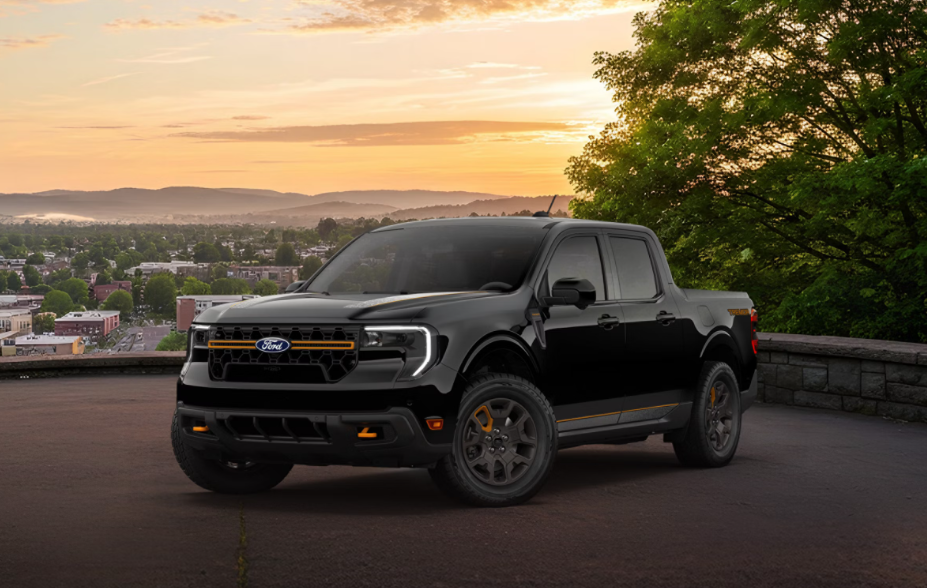
Two compact trucks are making a serious case for buyers who want real off-road capability without the bulk of a full-size pickup: the 2026 Ford Maverick Tremor and the 2026 Toyota Tacoma TRD Off-Road. Whether your week looks like a Brewster, NY commute followed by a Saturday trail run, or hauling gear to a trailhead in Northern Westchester County, the right truck depends on how you actually use it. We’ve put both side by side so you can make that call with confidence. If you’re already leaning toward the Maverick Tremor, browse our new Ford Maverick inventory in Brewster or schedule a test drive to see it in person.
The Maverick Tremor is Ford’s answer to drivers who want trail-ready hardware without giving up fuel efficiency or urban agility. The Tacoma TRD Off-Road goes the other direction, leaning hard into raw capability, traditional truck toughness, and a powertrain built for sustained heavy use. The choice isn’t obvious, and that’s exactly why this comparison is worth your time.
Size, Maneuverability, and Everyday Practicality
Size matters more in a compact truck than most buyers expect, at least until they’re trying to parallel park on a busy street or squeeze into a residential garage. The Maverick and Tacoma sit in the same general category, but they don’t occupy the same space, literally or philosophically.
Footprint and Daily Drivability Around Brewster
The Maverick’s smaller overall footprint gives it a real edge in places like Brewster, NY and Northern Westchester County, where Route 22 traffic, tight village lots, and older residential streets can make a larger truck feel like a liability. With a 40.0 ft. turning circle and an overall width of 83.5 in. with mirrors, lane changes and parking feel natural rather than stressful.
The Tacoma TRD Off-Road carries a 42.2 ft. turning circle and a noticeably wider, longer stance. That added bulk delivers a roomier cabin and a more commanding road presence, but in tight urban spaces, you’ll feel every extra inch. If your week is split between commuting and weekend adventures, the size difference has real daily consequences.
Bed Design and Cargo Versatility
The Maverick’s 4.5 ft. bed is built around the FLEXBED system, with integrated tie-downs and flexible cargo management that suits buyers hauling gear, groceries, and weekend equipment. The Tacoma’s 5.0 ft. or 6.0 ft. bed handles heavier, bulkier loads with less fuss and pairs naturally with overlanding setups and work-oriented accessories. For buyers whose truck regularly doubles as a work vehicle, the Tacoma’s bed capacity gives it the edge.
Powertrain Matchup: EcoBoost Turbo vs. i-FORCE Turbo
Both trucks run turbocharged four-cylinder engines, but their outputs and personalities reflect genuinely different priorities.
The Maverick Tremor’s EcoBoost Engine
Ford equipped the Maverick Tremor with a 2.0L EcoBoost turbocharged inline-4 producing 250 hp and 277 lb-ft of torque, paired with an 8-speed automatic and Advanced 4WD standard. It delivers smooth, responsive power for daily driving, light hauling, and moderate trail use. The EcoBoost returns 21 city / 27 hwy MPG, which makes a meaningful difference for drivers covering significant daily mileage in the greater Brewster area.
The Tacoma TRD Off-Road’s i-FORCE Engine
The Tacoma TRD Off-Road runs a 2.4L turbocharged inline-4 i-FORCE engine rated at 278 hp and 317 lb-ft of torque, also paired with an 8-speed automatic. That additional torque shows up most clearly when towing near maximum capacity or climbing steep, technical terrain. The tradeoff is efficiency: the i-FORCE returns 19 city / 23 hwy / 21 combined MPG. Worth noting, the i-FORCE MAX hybrid is available on select Tacoma trims, but this comparison focuses on the standard i-FORCE engine in the TRD Off-Road.
| Specification | 2026 Ford Maverick Tremor | 2026 Toyota Tacoma TRD Off-Road |
|---|---|---|
| Engine | 2.0L EcoBoost Turbo | 2.4L i-FORCE Turbo |
| Horsepower / Torque | 250 hp / 277 lb-ft | 278 hp / 317 lb-ft |
| Max Towing | 4,000 lbs. (w/ 4K Tow Package) | 6,300 lbs. |
| Fuel Economy (City/Hwy) | 21 city / 27 hwy MPG | 18 city / 23 hwy MPG |
| Ground Clearance | 9.4 in. | 10.0+ in. |
| Turning Circle | 40.0 ft. | 42.2 ft. |
Off-Road Capability: Trail Hardware and Real-World Performance
Both trucks carry legitimate off-road credentials, but they’re aimed at different types of trail use.
Suspension, Ground Clearance, and Underbody Protection
The Tacoma TRD Off-Road brings monotube Bilstein piggyback reservoir shocks, 10.0+ in. of ground clearance, and underbody protection designed for demanding conditions. Its suspension absorbs rough trails and rocky sections confidently, and that extra clearance provides a meaningful margin over obstacles that would stop a lower-riding vehicle cold.
The Maverick Tremor raises the bar significantly over the base Maverick with off-road-tuned suspension, 9.4 in. of ground clearance, skid plates, and 235/65R17 all-terrain tires. It handles light trails, gravel, and moderate off-road conditions without complaint. For rock crawling or technical backcountry routes, the Tacoma’s purpose-built hardware holds a clear advantage. For mixed-surface driving and recreational trails, the Tremor is more than capable.
4WD Systems, Locking Differentials, and Traction Control
Ford equipped the Maverick Tremor with Advanced 4WD standard, an electronically locking rear differential, and terrain management modes. It’s a confident traction system for the moderate off-road situations most compact truck buyers actually encounter. The Tacoma TRD Off-Road pairs part-time 4WD with its own electronically locking rear differential, Multi-Terrain Select, and Crawl Control, making it better suited for extreme, low-speed technical conditions where fine-grained traction control makes a measurable difference.
Towing, Payload, and Fuel Economy: The Numbers That Matter Day to Day
The Tacoma TRD Off-Road rates for 6,300 lbs. of max towing, a clear advantage for buyers who regularly haul trailers, boats, or equipment. The Maverick Tremor reaches 4,000 lbs. with the optional 4K Tow Package, suitable for lighter recreational hauling, small campers, and weekend gear trailers.
Where the Maverick Tremor earns ground back is efficiency. Its 23 combined MPG versus the Tacoma’s 21 combined MPG may look minor on paper, but for a driver covering 15,000 miles per year with an 18.5-gallon tank, that 2 MPG advantage adds up to roughly two to three fewer fill-ups annually. Over several years of daily commuting around Northern Westchester County, the cumulative fuel savings are a legitimate factor in total ownership cost.
Neither truck dominates across every metric. It comes down to which numbers matter most to your lifestyle.
Interior Comfort, Technology, and Everyday Livability
Inside the cabin, both trucks are genuinely livable, but their priorities diverge. Ford equipped the Maverick Tremor with SYNC 4 infotainment, Ford Co-Pilot360 Assist 2.0, and a 1,500W power outlet standard, creating a cabin that feels just as natural on a work commute as it does heading out on a Saturday morning. The layout is clean and refined rather than purely utilitarian.
The Tacoma TRD Off-Road’s interior is built for durability and outdoor use. Materials handle abuse well, passenger room is a genuine advantage over the more compact Maverick, and Toyota Safety Sense 3.0 provides a competitive active safety suite. The Tacoma’s cabin tilts toward ruggedness over refinement. Both trucks work well as daily drivers; the Maverick simply feels more at home in a suburban commute context.
2026 Ford Maverick Tremor vs. Toyota Tacoma TRD Off-Road: Which Compact Truck Should You Buy?
There’s no universal answer, and honestly, that’s good news. It means both trucks are excellent at what they’re designed to do.
Choose the Ford Maverick Tremor if you want a compact, efficient truck that handles daily commuting and weekend adventures without a fuel economy penalty. It’s the right fit for Brewster-area drivers who need a manageable footprint, modern technology, and solid off-road capability for light-to-moderate trails. The EcoBoost engine delivers genuine long-term efficiency, and the Maverick’s urban agility is hard to overstate for anyone navigating Northern Westchester County roads regularly.
Choose the Toyota Tacoma TRD Off-Road if towing capacity, raw off-road performance, and serious trail hardware are non-negotiable. The i-FORCE engine, Bilstein suspension, and dedicated crawl and terrain systems make it the stronger truck for buyers who regularly push into challenging backcountry or haul heavy loads. You’ll spend more at the pump, but you’ll gain capability the Maverick simply can’t match at the extremes.
Still working through the decision? Think about where your truck actually spends most of its time. The answer usually points you in the right direction. You can explore all new Ford trucks at Brewster Ford to compare current inventory and trim options before you decide.
See the 2026 Ford Maverick Tremor at Brewster Ford
For Brewster-area drivers who want a trail-ready truck that fits everyday life, the Maverick Tremor is a genuinely strong choice, and we’d love to show you why in person.
- Browse our new inventory to see what’s currently available
- Schedule a test drive and experience the Tremor on local roads
- Contact our team with questions about trim levels, packages, or availability
We’re located at 1024 Route 22, Brewster, NY 10509, and our sales team is ready to walk you through everything the 2026 Maverick Tremor has to offer.
Connect with us


- July 2026
- June 2026
- May 2026
- April 2026
- March 2026
- February 2026
- January 2026
- December 2025
- November 2025
- October 2025
- September 2025
- August 2025
- July 2025
- June 2025
- May 2025
- April 2025
- March 2025
- February 2025
- January 2025
- December 2024
- November 2024
- October 2024
- September 2024
- August 2024
- July 2024
- June 2024
- May 2024
- April 2024
- March 2024
- February 2024
- January 2024
- December 2023
- November 2023
- October 2023
- September 2023
- August 2023
- July 2023
- June 2023
- May 2023
- April 2023
- March 2023
- February 2023
- January 2023
- December 2022
- November 2022
- October 2022
- September 2022
- August 2022
- July 2022
- June 2022
- May 2022
- April 2022
- March 2022
- February 2022
- November 2021
- October 2021
- September 2021
- January 2021
- February 2017
- January 2017
- December 2016