
Picking your engine in the 2026 Ford Maverick really boils down to being honest about how you drive. Here at Brewster Ford, we spend a lot of time matching northern Westchester County folks with the right powertrain. Some want to squeeze every mile out of their Taconic State Parkway commute; others need confident power for those weekend trips into the Hudson Valley.
Ford engineered the Maverick around two completely different philosophies: a 2.5L Hybrid that’s all about efficiency and a 2.0L EcoBoost designed for people who need more muscle. There’s no wrong answer here, just different lifestyles. Feel free to browse our new Ford inventory and see which setup catches your eye before your test drive.
Two Engines, Two Different Driving Personalities
The 2026 Ford Maverick puts you at a crossroads between priorities. The 2.5L Hybrid cranks out 191 hp with electric motor backup, emphasizing fuel economy without giving up daily usability. It comes standard on XL, XLT, and Lariat trims, available with front-wheel drive or all-wheel drive.
The 2.0L EcoBoost jumps to 250 hp and 280 lb-ft of torque, delivering more aggressive acceleration and stronger hauling ability. This turbo option comes standard on Lobo and Tremor trims, and you can add it to XL and XLT models when you want that extra muscle.
Your choice ripples through more than just power numbers. Each engine connects to different transmissions, hits distinct fuel economy targets, and offers varying towing capacities based on configuration. The hybrid uses a power-split electric CVT, while the EcoBoost runs an 8-speed automatic on most trims.
The Lobo uses a 7-speed quick-shift transmission with paddle shifters, tuned specifically for its street-performance character. Both can hit 4,000 lbs of towing capacity with the right 4K Tow Package, though the hybrid needs AWD to unlock that capability.
The 2.5L Hybrid: Built for Everyday Efficiency
The hybrid system tackles the question most compact truck buyers ask first: Can I actually afford to drive this thing daily? Ford’s solution blends a 2.5L Atkinson-cycle engine with an electric motor, creating a setup that captures energy during braking and delivers instant electric torque when you’re accelerating from stops.
What 191 Horsepower Feels Like in Real Traffic
Numbers on paper don’t always tell you how a truck actually behaves when you’re merging onto I-684 during morning rush hour. The hybrid’s 191 hp might seem modest next to the EcoBoost, but that electric motor gives you immediate response that makes city driving surprisingly peppy. No turbo lag, no waiting for power to build. Just smooth, linear acceleration that feels confident in stop-and-go traffic around Brewster.
The electric motor adds extra torque beyond the engine’s 155 lb-ft rating, which you’ll feel when pulling away from traffic lights or navigating crowded parking lots. The switch between electric and gas power happens so smoothly you barely notice, with the CVT keeping engine revs low and quiet during highway cruising.
Fuel Savings That Actually Add Up
The official EPA ratings for the hybrid look impressive: up to 42 MPG city, 35 highway, and 38 combined with front-wheel drive. That 13.8-gallon tank might seem small, but it gives you over 500 miles of range during mixed driving. Your actual mileage will vary based on how you drive, the terrain, and weather conditions, but the hybrid consistently delivers real-world economy that challenges much smaller vehicles.
Let’s crunch some numbers on a typical commute. Drive 15,000 miles annually with fuel averaging $3.50 per gallon, and the hybrid’s combined 38 MPG works out to roughly $1,380 in yearly fuel costs. Over five years, that efficiency advantage really compounds compared to thirstier vehicles. The regenerative braking system also makes your brake pads last longer, cutting maintenance costs beyond just fuel savings.
The 2.0L EcoBoost: When You Need More Muscle
Some drivers care more about capability than maximum efficiency. The turbocharged EcoBoost targets buyers who tow occasionally, load the bed regularly, or just prefer a more responsive throttle. This is the same proven engine architecture Ford uses throughout its lineup, delivering reliability alongside performance.
250 Horsepower and What It Does for You
The jump from 191 hp to 250 hp becomes obvious when you’re accelerating up hilly Putnam County roads with a loaded bed or trailer. That substantial 280 lb-ft of torque shows up at just 3,000 rpm, providing strong midrange power exactly when you need it for passing slower traffic on two-lane roads or confidently merging into highway speeds.
Turbocharged engines have their own personality compared to naturally aspirated powertrains. There’s a brief moment of boost building after you press the accelerator, followed by a satisfying surge of power that feels stronger than the numbers suggest. The 8-speed automatic responds quickly to throttle inputs, downshifting smoothly when you need acceleration and upshifting early during cruising to save fuel. The EcoBoost won’t match hybrid economy figures, but it still delivers respectable efficiency for a turbo engine, especially during highway driving.
Drivetrain Choices: AWD and Advanced 4WD Explained
The EcoBoost offers the same all-wheel drive system you can get on hybrid models, using an electronically controlled rear-drive unit to send power back when front wheels slip. This proves valuable during winter weather on northern Westchester County roads, providing confident traction without requiring any input from you.
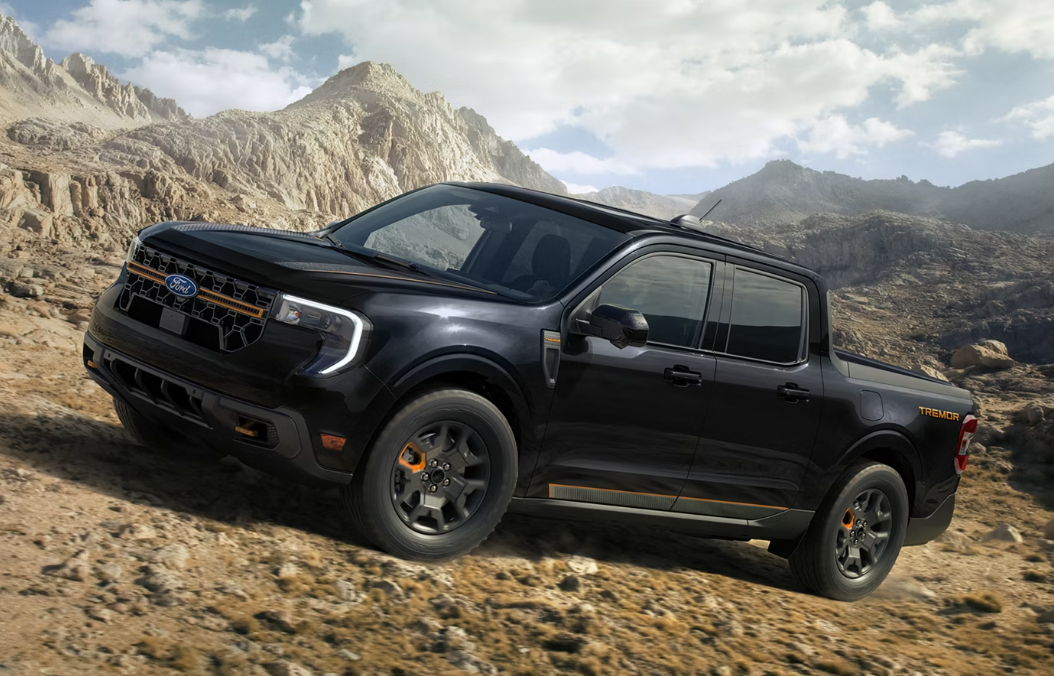
Lobo and Tremor trims introduce Advanced 4WD as an alternative to standard AWD. This system includes four drive modes (Normal, Eco, Sport, and Slippery/Sand) that adjust throttle response, transmission shift points, and power distribution. The Tremor configuration adds off-road suspension tuning, upgraded brakes, and 19-inch wheels designed for trail use. Advanced 4WD isn’t necessary for occasional snow or gravel roads, but it enhances capability for buyers who venture beyond pavement regularly.
How Each Engine Handles Real-World Driving
Specifications matter less than how each powertrain performs during the driving you actually do. We’ve helped hundreds of customers match their engine choice to their routines, and certain patterns emerge clearly.
Commuting and City Driving
The hybrid dominates urban environments where its electric motor contributes most effectively. That instant torque feels energetic when you’re navigating tight parking garages or accelerating through short gaps in traffic. The quiet operation reduces fatigue during long commutes, and the fuel economy advantage becomes most pronounced in stop-and-go conditions.
The EcoBoost works perfectly fine for city driving, though you’ll give up some efficiency. The turbo’s power feels excessive at low speeds but becomes appreciated when you need quick acceleration to merge or pass. If your commute includes significant highway portions where the hybrid’s advantage shrinks, the EcoBoost’s capability gap narrows considerably.
Hauling Gear and Light Towing
Both engines handle the Maverick’s 1,500-lb payload capacity without breaking a sweat. That’s the weight of several sheets of plywood, a riding mower, or camping gear for a family weekend. The difference shows up when towing.
The hybrid hits 2,000 lbs of towing capacity standard, sufficient for a small utility trailer or lightweight watercraft. Add the 4K Tow Package and AWD and that jumps to 4,000 lbs, matching the EcoBoost’s maximum. However, towing even moderate loads kills the hybrid’s fuel economy advantage significantly as the electric motor contributes less at sustained highway speeds.
The EcoBoost keeps a stronger performance while towing. That 280 lb-ft of torque helps the truck feel more composed going up grades with a trailer, and the transmission programming adapts better to loaded conditions. If you tow monthly rather than occasionally, or if your trailer weight approaches 4,000 lbs regularly, the EcoBoost delivers noticeably better confidence.
Which Maverick Engine Fits Your Life
Your driving patterns reveal which engine makes sense. The hybrid serves buyers who:
- Commute daily with minimal highway miles, where city MPG matters most
- Care more about fuel savings than maximum acceleration
- Tow rarely or haul loads under 2,000 lbs
- Appreciate quiet operation and smooth power delivery
The EcoBoost targets different priorities:
- Need confident passing power and spirited acceleration
- Tow frequently or approach maximum payload regularly
- Drive primarily highway miles where hybrid efficiency diminishes
- Want sportier throttle response and exhaust note
Neither engine limits the Maverick’s practicality or versatility. Both deliver truck capability in a compact footprint that parks easily and handles daily errands without feeling oversized. The decision comes down to whether you value maximum efficiency or prefer extra performance capability. We encourage you to schedule a test drive comparing both engines back-to-back on roads you actually travel.
Questions to Ask Yourself Before Your Test Drive
Arrive at our Brewster, NY dealership prepared to evaluate how each engine matches your specific needs:
Daily Driving Habits
What’s your typical commute distance and route? More stop-and-go city traffic or sustained highway cruising? The hybrid rewards short trips and urban driving, while the EcoBoost’s advantage grows with highway miles.
Hauling and Towing Plans
How often will you use the bed, and what weights do you anticipate? Do you own a trailer, and if so, what’s its loaded weight? Be realistic about frequency. Occasional weekend projects differ from weekly hauling needs.
Fuel Cost Sensitivity
How much do fuel savings influence your purchase decision? Calculate the approximate annual difference based on your expected mileage. The hybrid’s efficiency premium matters more if you drive 20000 miles yearly versus 10000.
Weather and Terrain
Do you navigate winter conditions regularly or venture onto unpaved roads? Both engines offer AWD, but the EcoBoost provides Advanced 4WD options on specific trims for enhanced capability.
Long-Term Ownership
Planning to keep the truck for five years or more? Fuel savings compound over time, making the hybrid’s efficiency advantage more valuable. Shorter ownership periods reduce that benefit.
If you’re still uncertain after considering these factors, that’s perfectly normal. Contact our team to discuss your specific situation. We can help clarify which configuration aligns best with your lifestyle before you visit.
Explore the 2026 Ford Maverick at Brewster Ford
Visit Our Dealership
We maintain strong 2026 Maverick inventory in Brewster across all five trims including XL, XLT, Lariat, Lobo, and Tremor, with both engine options represented. Our team understands northern Westchester County driving conditions and can provide localized insight about which configuration suits your commute, recreational needs, and budget.
Financing and Next Steps
Financing options make both powertrains accessible, with competitive rates available through our on-site finance team. We can explore financing options that fit your budget while accommodating any additional features or packages you want.
The 2026 Ford Maverick’s engine choice represents a genuine decision point, not a compromise. Whether you prioritize efficiency or capability, Ford engineered both options to deliver practical truck utility in a format that works for real life. Visit us at 1024 Route 22 in Brewster, NY, or call our sales team at 845-205-7019 to arrange test drives and experience how each engine feels on the roads you’ll actually drive. The right Maverick is waiting; let us help you find it.
Connect with us


- July 2026
- June 2026
- May 2026
- April 2026
- March 2026
- February 2026
- January 2026
- December 2025
- November 2025
- October 2025
- September 2025
- August 2025
- July 2025
- June 2025
- May 2025
- April 2025
- March 2025
- February 2025
- January 2025
- December 2024
- November 2024
- October 2024
- September 2024
- August 2024
- July 2024
- June 2024
- May 2024
- April 2024
- March 2024
- February 2024
- January 2024
- December 2023
- November 2023
- October 2023
- September 2023
- August 2023
- July 2023
- June 2023
- May 2023
- April 2023
- March 2023
- February 2023
- January 2023
- December 2022
- November 2022
- October 2022
- September 2022
- August 2022
- July 2022
- June 2022
- May 2022
- April 2022
- March 2022
- February 2022
- November 2021
- October 2021
- September 2021
- January 2021
- February 2017
- January 2017
- December 2016