

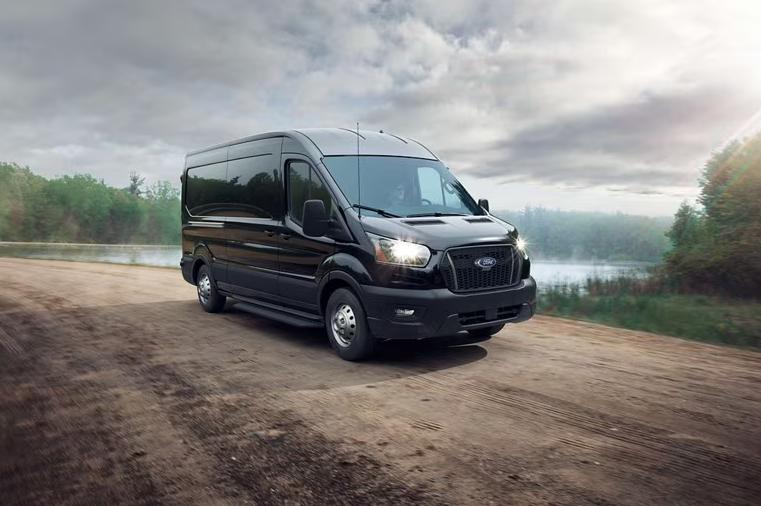
The right commercial van can transform your business operations. In the world of cargo vans, the 2025 Ford Transit and Mercedes-Benz Sprinter stand tall, but picking between them depends on what your business actually needs, how much you can spend, and your long-term goals. Join our team at Brewster Ford as we compare the 2025 Ford Transit vs. the Mercedes-Benz Sprinter, looking at their strengths and what sets them apart to help you decide which one makes a smart investment for your Brewster business.
What’s New for the 2025 Ford Transit and Mercedes-Benz Sprinter?
The 2025 Ford Transit comes with some useful updates for Brewster workers. These include three new trade-specific packages: one for electricians with space to store parts, another for heating, ventilating, and air conditioning techs to organize equipment, and a general contractor setup. There’s also a new Wall Liner Kit with a ceiling liner, door covers, lighting, and wheel well protection that makes your van look more professional and keeps cargo from getting damaged.
Ford has improved the loading situation, too. Low and medium-roof cargo models now have 50/50 split rear doors that swing open 180 degrees, while the high-roof vans open 253 degrees. The 2025 Mercedes-Benz Sprinter has a few minor updates, such as a new Hightech Silver finish and improvements to the driver-assist features.
Size and Configuration Options: Finding Your Perfect Fit
Both vans come in multiple sizes, but there are real differences that’ll matter day to day. In a cargo van dimensions comparison, the Transit wins on headroom with up to 56.6 inches inside vs. the Sprinter’s 56.4 inches in high-roof models. Drivers who spend all day behind the wheel will notice the Transit gives you an extra 2.4 inches for your legs and a half-inch more shoulder space than the Sprinter.
The Sprinter’s wheelbase options run from 144 inches to 170 inches compared to the Transit’s 129.9 inches to 147.6 inches, both giving you flexibility for different loads. If you need to haul people, both vans fit up to 15 passengers with three rows of three seats plus one row of four when set up for people-moving.
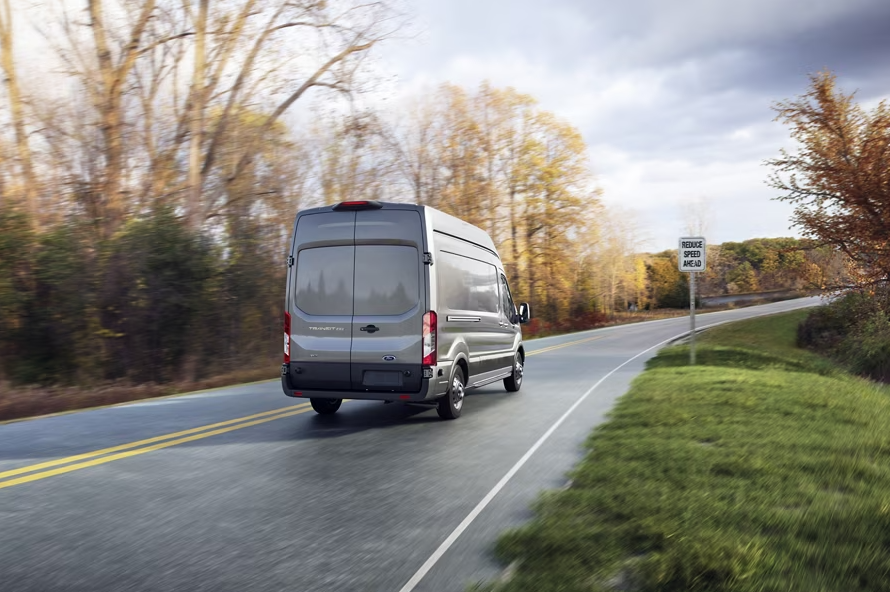
Cargo Capacity and Payload: Maximizing Your Hauling Potential
There’s not a lot of difference between the cargo capacity of the Ford Transit vs. Sprinter. With the extended wheelbase and high roof, the Mercedes-Benz Sprinter holds up to 533 cubic feet, while the Transit holds a max of 536.4 cubic feet. If you’re hauling heavy gear, the Sprinter wins with a maximum payload reaching 6,812 pounds in the Cargo Van 4500 standard roof model. The Transit ranges from 3,145 pounds to a max of 5,052 pounds in the T-350HD DRW high roof extended length model. For comparison, the Ram ProMaster sits in the middle with 4,750 pounds payload capacity.
Engine Performance and Fuel Efficiency for Business Use
Ford gives you two engine choices for the 2025 Transit: a naturally aspirated 3.5-liter V-6 that puts out 275 horsepower and 260 lb-ft of torque or a 3.5-liter EcoBoost V-6 that jumps to 310 horsepower and 400 lb-ft of torque. The second option really moves, especially when loaded up. Both engines work with a 10-speed automatic transmission that helps save fuel across different driving situations.
The Mercedes-Benz van’s diesel engine is a 2.0-liter turbo-diesel that makes 170 horsepower and 295 lb-ft of torque. You can opt for a more powerful version that gets 211 horsepower and 332 lb-ft of torque. Although the numbers are lower than the Ford, diesel torque feels different on the road, especially when hauling heavy loads or highway cruising. For pulling trailers, the Transit can tow up to 6,900 pounds, while the Sprinter can tow up to 7,500 pounds.
Reliability, Maintenance, and Warranty Coverage
Repair costs and downtime impact profits, so you’ll want to know how the Ford Transit vs. Mercedes-Benz Sprinter reliability compares. Transit engines often pass 200,000 miles with proper care, and Ford has built a solid reputation for making tough, reliable work vans. Downsides include worse gas mileage than smaller vans, and they lose value faster.
Sprinters are known for their durability, with some hitting 300,000 to 500,000 miles. However, they cost more to fix than a Transit due to fancy engineering and specialized service needs. Ford has a stronger service network with 2,991 van dealers nationwide compared to 277 for Mercedes-Benz. That’s why fleet managers report Transit downtime averaging 1.2 days per repair vs. the Sprinter’s 3.8 days. Both manufacturers offer a three-year/36,000 mile limited warranty and a five year/60,000 mile powertrain warranty.
Technology, Safety, and Driver-Assist Features
Both vans pack useful tech but with different priorities. Ford focuses on practical stuff that keeps work moving and drivers safe during long days. The Transit comes with Ford Co-Pilot360, including crash prevention, lane-keeping, and blind-spot warnings. It also has a side-wind stabilization system and stability control. You can add a 12-inch touch screen and wireless Apple CarPlay and Android Auto.
Mercedes-Benz brings its MBUX system with a 10.25-inch touch screen, voice controls, steering wheel buttons, and phone integration. You can also get fancy climate control, USB-C ports, and wireless charging.
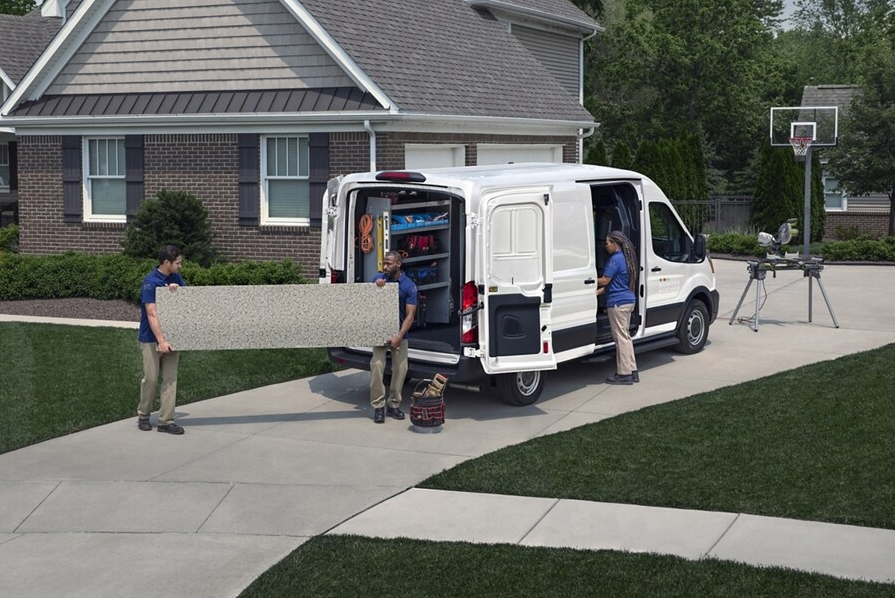
Which Van Is Best for Your Business Type?
Different businesses need different tools. Trades love the Transit for its various sizes and cheaper maintenance. It works great for contractors because you can find service anywhere, and delivery services might prefer the Transit’s safety tech and car-like handling. The Sprinter offers fuel-efficient diesels and has a higher payload and a nicer interior, but costs more up front. The Transit starts at $47,400, while the Sprinter jumps to $53,125. The Transit wins on initial cost and maintenance with dealers everywhere, whereas the Sprinter saves fuel and holds its value better long-term.
Shop the Ford Transit in Brewster, New York Today
So, should you choose the 2025 Ford Transit or the Mercedes-Benz Sprinter? After looking at both vans side by side, the Transit stands out for its flexibility, lower price, cheaper maintenance, and daily usability.
Want to see how the Transit can cut costs and boost productivity? Stop by Brewster Ford to check out our selection, take one for a test-drive, and chat with our commercial vehicle experts who understand what your business needs to grow.
Images from ford.com
Connect with us


- July 2026
- June 2026
- May 2026
- April 2026
- March 2026
- February 2026
- January 2026
- December 2025
- November 2025
- October 2025
- September 2025
- August 2025
- July 2025
- June 2025
- May 2025
- April 2025
- March 2025
- February 2025
- January 2025
- December 2024
- November 2024
- October 2024
- September 2024
- August 2024
- July 2024
- June 2024
- May 2024
- April 2024
- March 2024
- February 2024
- January 2024
- December 2023
- November 2023
- October 2023
- September 2023
- August 2023
- July 2023
- June 2023
- May 2023
- April 2023
- March 2023
- February 2023
- January 2023
- December 2022
- November 2022
- October 2022
- September 2022
- August 2022
- July 2022
- June 2022
- May 2022
- April 2022
- March 2022
- February 2022
- November 2021
- October 2021
- September 2021
- January 2021
- February 2017
- January 2017
- December 2016